India Crosses 100 GW Solar Manufacturing Milestone
Renewable Energy AnnouncementPosted by admin on 2026-04-03 12:18:59 |
Share: Facebook | Twitter | Whatsapp | Linkedin Visits: 289
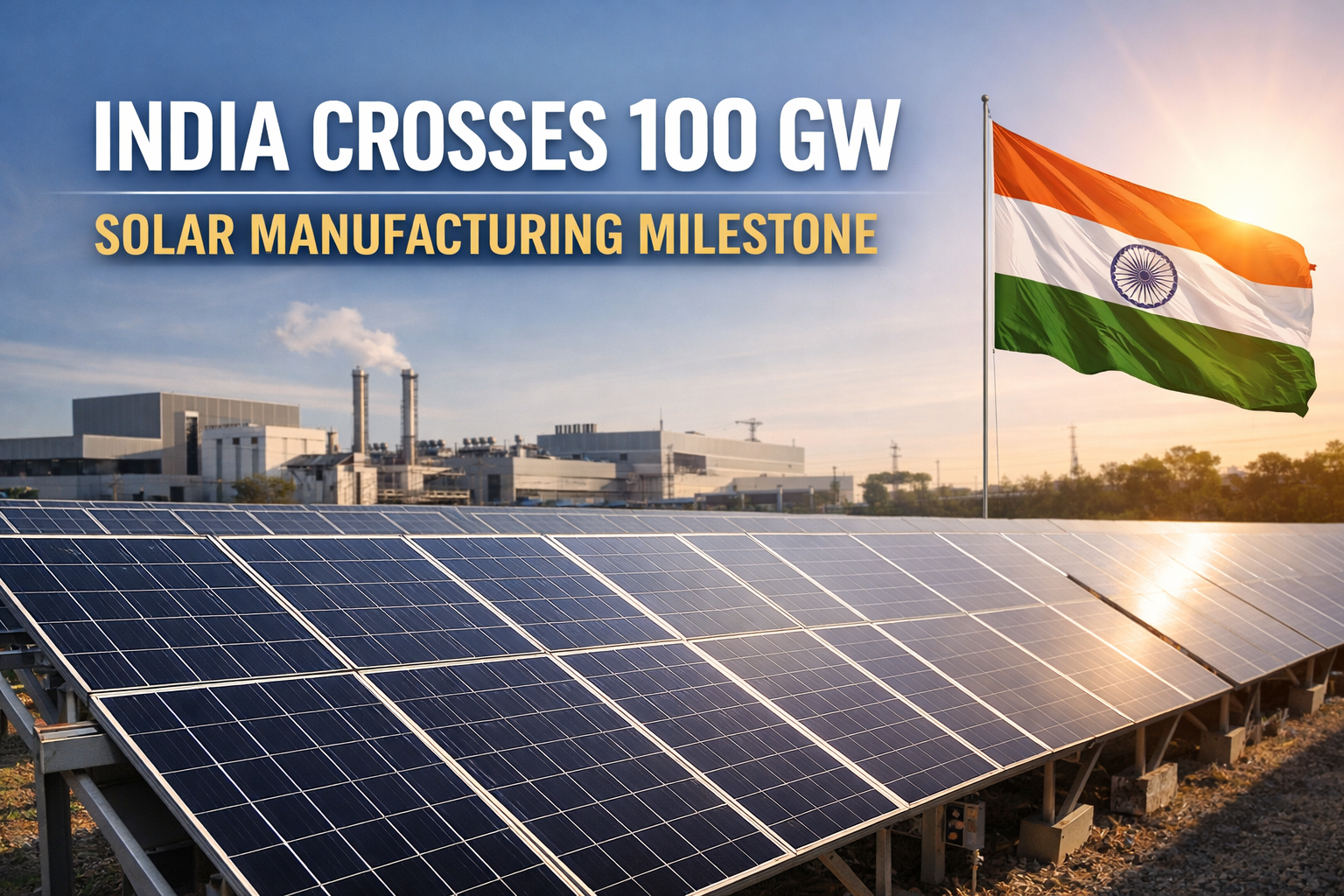
India has achieved a significant milestone in its clean energy journey by surpassing 100 GW of solar PV module manufacturing capacity under the Approved List of Models and Manufacturers (ALMM). This marks a major shift in the country’s energy landscape, transforming India from a net importer of solar modules into a global manufacturing hub and positioning it as the third-largest solar manufacturing nation worldwide.
A decade ago, India’s domestic solar manufacturing capacity was minimal. However, strong policy support through initiatives such as the Production Linked Incentive (PLI) scheme and the ALMM framework has accelerated growth. These measures have strengthened domestic production, reduced reliance on imports, and created a robust ecosystem that has attracted both domestic and international investments.
This expansion aligns closely with India’s ambitious target of achieving 500 GW of non-fossil fuel capacity by 2030. Scaling domestic manufacturing not only enhances energy security but also drives industrial growth, generates employment, and supports the transition toward a sustainable energy future.
Despite this progress, several challenges remain. India continues to depend on imports for critical upstream components such as solar cells and wafers, limiting full supply chain independence. Rapid capacity expansion also raises concerns about overcapacity, which could impact pricing and profitability. Additionally, global trade barriers and increasing international competition may influence export potential for Indian manufacturers.
Looking ahead, India aims to strengthen the entire solar value chain—from raw materials to advanced module technologies—while promoting innovation and operational efficiency. Crossing the 100 GW milestone is not just a numerical achievement; it represents a strategic step toward energy self-reliance, industrial growth, and climate leadership, reinforcing India’s role in the global clean energy transition.
Conclusion (eClouds Perspective)
The achievement of 100 GW solar manufacturing capacity presents strong growth opportunities for eClouds, driven by increasing demand for digital energy solutions and potential industry partnerships.
However, rapid expansion also introduces challenges such as:
- Scaling infrastructure and operations
- Managing integration complexities
- Intensifying market competition
Additionally, price fluctuations due to potential overcapacity may impact market stability and strategic planning.
Overall, this milestone positions eClouds to grow strategically while navigating a dynamic and evolving solar ecosystem.
Search
Recent News
- Reduction of Cross Subsidies in Karnataka's Electricity Sector
- Economic Benefits of Solar Power Projects
- Karnataka Open Access Rules and Regulations
- eclouds
- Small Hydel Policy 2024
- India’s Renewable Energy Milestones: 2024
- eClouds Eyarthi's AMC on Solar Projects
- Reduction of Cross Subsidies in Karnataka's Electricity Sector


