India’s Solar Sector Gains Momentum in Union Budget 2026–27
Electricity News AnnouncementPosted by admin on 2026-02-04 09:38:29 |
Share: Facebook | Twitter | Whatsapp | Linkedin Visits: 322
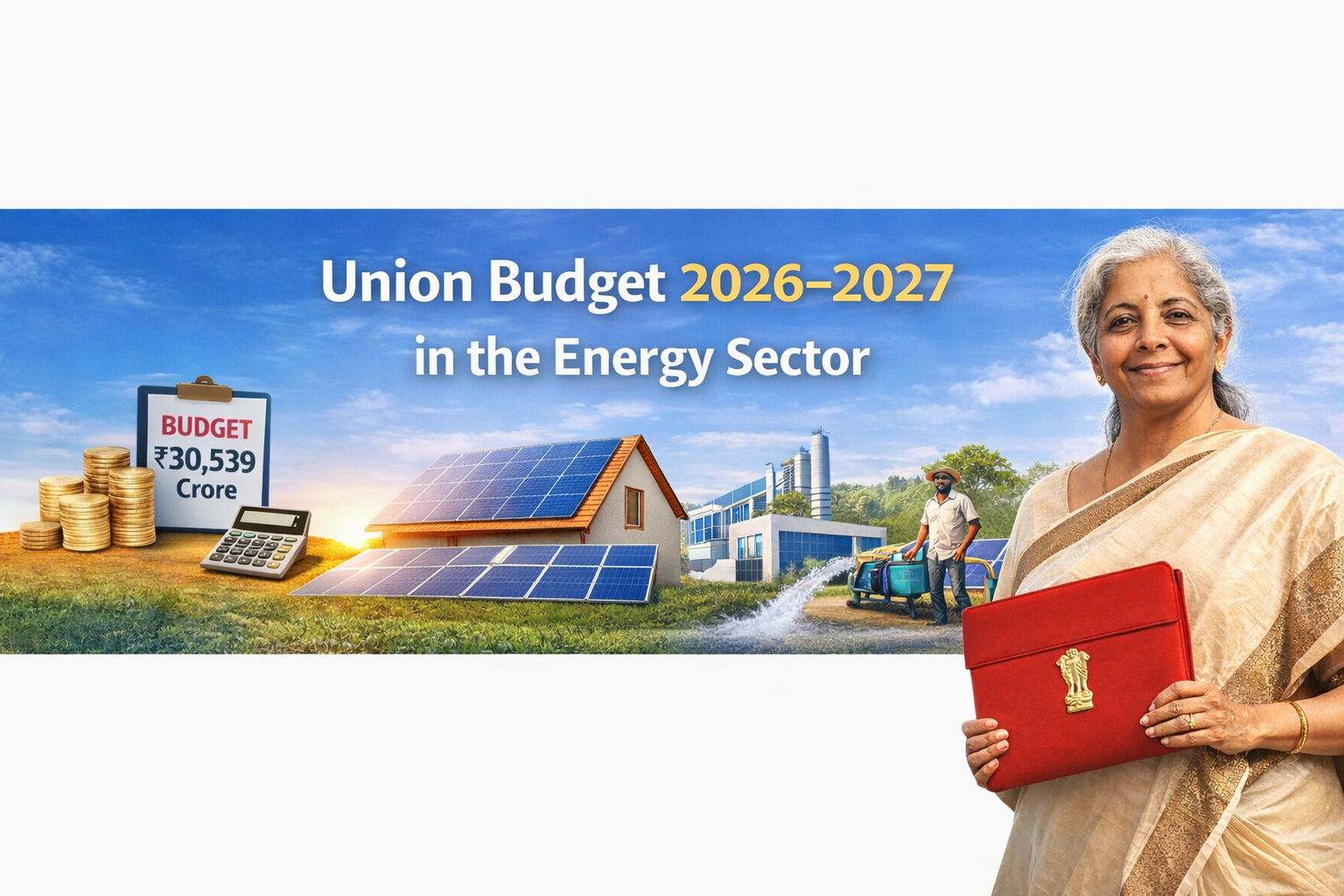
India’s Union Budget 2026–27 has delivered a clear and confident message for the renewable energy sector, with solar power emerging as a central pillar of the country’s clean-energy and economic strategy. The budget reflects the government’s intent to accelerate solar deployment, strengthen domestic manufacturing, and make clean electricity more accessible to households, farmers, and industries across the country.
One of the most significant announcements is the sharp increase in budgetary allocation for solar energy. Solar-related funding has risen by nearly 32 percent compared to the previous year, taking the total allocation to approximately ₹30,539 crore. This expanded outlay covers rooftop solar programmes, large-scale grid-connected projects, and supporting infrastructure, reinforcing solar power’s role as the backbone of India’s renewable energy expansion and its 2030 non-fossil fuel targets.
Rooftop solar has received special attention through the PM Surya Ghar: Muft Bijli Yojana, which continues to be a flagship scheme in the clean-energy landscape. An allocation of ₹22,000 crore has been made for the scheme in the 2026–27 budget. The programme aims to enable millions of households to install rooftop solar systems and benefit from up to 300 units of free electricity per month, reducing electricity bills while promoting decentralised power generation and citizen participation in the energy transition.
The budget has also strengthened support for solar adoption in agriculture and rural areas. Increased funding of around ₹5,000 crore for the PM-KUSUM scheme is expected to accelerate the solarisation of irrigation pumps and decentralised solar projects. This move will help farmers reduce their dependence on diesel, lower operating costs, and improve access to reliable and sustainable energy in rural regions.
To support long-term growth, the government announced key customs duty exemptions aimed at boosting domestic solar manufacturing. Duties have been removed on critical inputs used in solar glass production, as well as on capital goods required for lithium-ion battery and energy storage manufacturing. These measures are expected to reduce production costs, improve competitiveness, and strengthen India’s clean-energy supply chain.
Overall, the Union Budget 2026–27 provides a strong policy foundation for the solar sector. By combining higher financial allocations, manufacturing incentives, and consumer-focused schemes, the budget positions solar energy as a driving force behind India’s sustainable growth, energy security, and climate commitments.
Conclusion:
The Union Budget 2026–27 opens significant opportunities for eClouds to expand its solar solutions across India. With increased funding, rooftop and distributed solar support, and incentives for energy storage, eClouds is well-positioned to deploy projects faster, deliver smarter energy management solutions, and help businesses and communities benefit from India’s clean-energy transition. The budget enables eClouds to transform policy and allocations into tangible impact, driving efficiency, sustainability, and growth.
Search
Recent News
- Reduction of Cross Subsidies in Karnataka's Electricity Sector
- Economic Benefits of Solar Power Projects
- Karnataka Open Access Rules and Regulations
- eclouds
- Small Hydel Policy 2024
- India’s Renewable Energy Milestones: 2024
- eClouds Eyarthi's AMC on Solar Projects
- Reduction of Cross Subsidies in Karnataka's Electricity Sector


